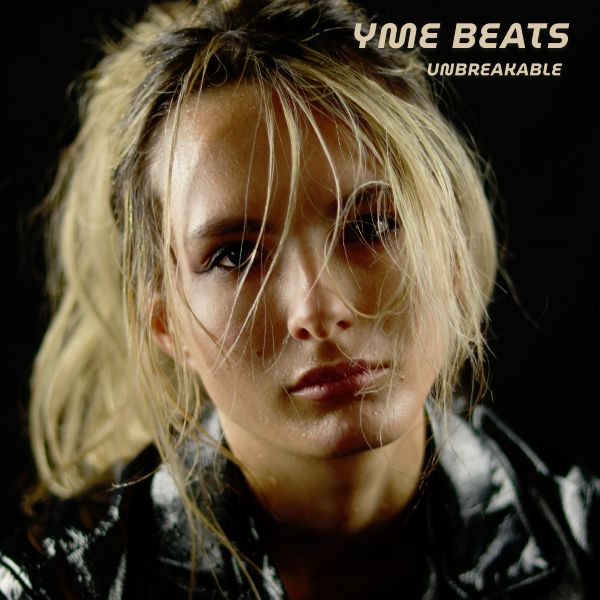
Listen to Unbreakable here
“Unbreakable” touches on some very personal themes like self-love after a breakup and overcoming bullying. How did channeling those difficult experiences into an energetic track help your own healing process?
When you go through a breakup or had to deal with bullying, it can leave you feeling small, insecure, and disconnected from yourself. For a long time, I carried that quietly. Writing “Unbreakable” gave me a way to finally let it out, but not in a way that felt heavy or hopeless. Instead, I chose to transform that pain into strength.
Making it an energetic track was important. The beat, the rhythm, it all symbolized momentum. It reminded me that I wasn’t stuck in those moments. Every time I sang it, I felt like I was reclaiming my voice and my confidence. It was like telling my younger self, “I survived this. I am still here.”
Putting those emotions into lyrics helped me process them instead of suppressing them. It turned memories that once hurt into something empowering. Over time, the song stopped being about what happened to me and became about who I chose to become afterward. “Unbreakable” became my reminder, and hopefully other people’s too.
You have an energetic sound, yet your lyrics deal with vulnerable topics. How do you find the balance between a hard electronic sound and a soft emotional message?
I’ve always loved big sounds, heavy drops, driving beats, and that rush you feel when a track hits. Electronic music gives me space to feel powerful and fearless. But emotionally, I’m someone who feels things deeply. I think a lot, I reflect a lot, and I don’t want to hide that part of myself.
The contrast is actually what makes it work. The strong production pulls people in, gives them energy, and makes them want to move.
Your music blends Electronic House, Hardstyle, and Drum and Bass. What was the “aha!” moment when you realized these heavy-hitting genres were the right fit for the melodic pop hooks in “Unbreakable”?
I was working on an early version of “Unbreakable,” I called it “Backbite Bitch” and I had this really honest, melodic hook that meant a lot to me and a more aggressive approach. Out of curiosity, I dropped it over a harder, faster beat—something inspired by Hardstyle and Drum and Bass—and changed the lyrics.
Suddenly, everything clicked. The emotion didn’t disappear. It actually felt bigger. More alive. More powerful. That was the moment I realized: the contrast was the magic. The heavy drops and fast rhythms represented resilience, adrenaline, and survival. The pop melodies carried the vulnerability and hope. Together, they told the full story of what I’d been through—pain, recovery, and strength all at once.
Most kids grow up in a classroom, but you were on the road with your parents from the age of one. How did that nomadic, backstage lifestyle influence your perspective on what it means to be a professional artist today?
Growing up on the road shaped everything about how I see music and professionalism today; it was basically my first classroom. Of course I went to school because that’s the law. I was diagnosed with classic autism when I was 6 years old. But I couldn’t deal with the school program so I was basically just there and I wasn’t able to learn in a regular way which led to bullying by other classmates.
Instead of learning about work from textbooks, I learned from watching my mom backstage, in vans, in hotels, and in empty venues long before showtime. I saw how much preparation went into a “magical” performance. The soundchecks, the rehearsals, the exhaustion, the problem solving when things went wrong. From a very young age, I understood that being an artist isn’t just about being on stage, it’s about showing up every day, even when no one is watching.
That nomadic life also taught me adaptability. One week we’d be in one city, the next week somewhere completely different. For me that felt hard. Plans change, schedules shift, opportunities come and go. I don’t feel good when things aren’t stable; I’m trying to build stability inside myself.
Being backstage so much also humanized the industry for me. I saw artists as real people, not untouchable stars. I watched them have bad days, get nervous, mess up, and still go out and give everything. That showed me that professionalism isn’t about being perfect, it’s about being committed, respectful, and resilient.
Your mother is a member of the legendary disco group Ottawan. While your music is firmly in the electronic world, are there any “disco DNA” elements or performance tips you’ve inherited from her?
Absolutely—there’s a lot of “disco DNA” in me, even if my sound lives in a very different world. Growing up with a mother who was part of Ottawan meant I was constantly surrounded by music that was built around joy, movement, and connection. Disco wasn’t just about the sound, it was about making people feel good. That’s something I’ve carried with me into everything I do.
One of the biggest things I inherited from her is the importance of energy on stage. From watching her perform, I learned that it’s not enough to just sing well or press play on a great track. You have to live the music. Your body, your face, your presence, all of it matters. The audience feels what you feel.
Disco is also very hook-driven and rhythm-focused, and that definitely shows up in my work. Even in Hardstyle or Drum and Bass, my producer Marco Roosink and I are always thinking: Is this catchy? Does it make people want to move? Will it stick in their head? That instinct comes straight from that disco tradition.
Performance-wise, she taught me professionalism and warmth. No matter how tired you are, no matter what’s happening behind the scenes, when you walk on stage, you give 100%. You smile. You connect. You respect the crowd. That’s something I take very seriously.
You’re based in The Netherlands—a country famous for its electronic music history. How does the local Dutch scene impact your creative energy compared to the international influences you grew up with?
I don’t get much recognition in my country. There are a lot of national artists nowadays in my country, they pop up all at once, reaching high chart positions and that’s basically it now. I get far more recognition abroad.
If you had to pick one specific element of your music that is your “sonic signature,” what would it be?
A lot of electronic music builds tension and then releases it with power, but for me, that release always has to mean something. I’m not just chasing impact, I’m chasing a feeling. When the drop hits, I want it to feel like a breakthrough moment. Like you’ve pushed through something and suddenly you’re standing taller.
If someone hears one of my songs and thinks, “This makes me feel strong, but also understood,” then I know I’ve done my job. That blend of electricity and emotion, that’s my signature.
You are currently an unsigned artist. What does that freedom allow you to do creatively that you feel might be restricted if you were tied to a traditional label right now?
Being unsigned right now gives me something incredibly valuable: complete creative ownership of my story, my sound, and my pace.
The biggest freedom is that I don’t have to dilute who I am to fit a market trend. I can blend Hardstyle with pop hooks, switch tempos, get emotional in one track and explosive in the next, and no one is telling me, “That won’t stream,” or “Radio won’t like that.” I get to follow instinct instead of algorithms. Right now, this freedom lets me and Marco protect the heart of my music. I’m building something honest, resilient, and long term. And that foundation matters more to me than fast success.
With “Unbreakable” setting the stage, what do you want your growing fanbase to expect from YME BEATS in the coming year—more high-energy singles, or perhaps a move toward live performances?
First, fans can definitely expect more high energy singles, but also emotional easy-listening singles. Marco and I are in a really productive phase right now, and we are building on that ‘emotional meets explosive’ style. There’s more music coming that’s bigger, bolder, and more confident, but still rooted in real stories and honest feelings. Each release is meant to feel like another chapter, not just a standalone track.
At the same time, I’m actively moving toward live performances. That’s a huge goal for me this year. My music is made to be felt in a room with lights, volume, energy, and shared emotion. I want people to experience those drops, those melodies, and those moments together, not just through headphones.